




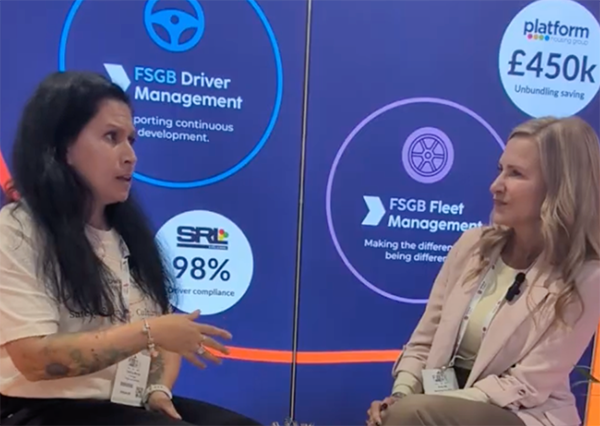


If you are wondering how to transform your fleet safety culture, the answer lies in a blend of top-down commitment, transparent communication, comprehensive driver inductions, and establishing unwavering standards. It’s not just about ticking a box; it’s about making sure your drivers understand why safety procedures exist—to protect them, your business, and the wider public. In the latest Fleet Service GB podcast, I had an eye-opening chat with Andy Fay, Head of Transport for SRL Traffic Systems, about exactly how to achieve this.
You can watch the full podcast episode on YouTube here: Driven to Succeed: Transforming Fleet Safety & Culture with Andy Fay.
Before we dive into the full article covering our conversation, here are the core takeaways from the episode.
Key Takeaways
- Start with the ‘Why’: Driver compliance improves massively when you explain the reasons behind daily checks rather than just demanding they are done.
- Invest in Driver Inductions: Centralised, in-depth driver training days can drastically improve driver performance, reduce insurance claims, and boost morale.
- Ditch the Paperwork: Embracing digital tools and apps for daily vehicle defect reporting removes grey areas and streamlines fleet management.
- Set the Bar and Don’t Deviate: A strong fleet safety culture requires clear standards. If a vehicle has a defect, it doesn’t go out. Simple as that.
- Embrace Honest Partnerships: Working with transparent, proactive fleet management partners makes scaling and compliance much easier.
From Warehouse Worker to Head of Transport: Andy’s Journey
We started our chat by exploring how Andy found his way into fleet management. Like many of us in the industry, it wasn’t a path laid out at a school career fair!
Around 20 years ago, as a young dad needing flexible hours to juggle childcare, Andy took a night shift job in a warehouse distribution centre. When the transport side of the business changed hands and staff walked out, Andy, armed with a bit of geographical knowledge and a willingness to help, stepped into the transport office to hand out delivery runs.
He admits those early days were a trial by fire. Drivers would challenge him on routes, assuming the “young lad” didn’t understand driver hours. Being naturally stubborn, Andy went home, taught himself the transport laws, and came back the next day ready to organise the planning properly.
From helping out with paperwork to running night shifts at DHL and eventually completing his International Driver Certificate of Professional Competence (CPC), Andy learned entirely on the job. He credits his rise to senior transport managers who took him under their wing, listened to his ideas, and gave him the space to grow.
Tackling a Sizable Fleet at SRL Traffic Systems
Fast forward to today, and Andy is the Head of Transport for SRL Traffic Systems. It’s a hefty operation, boasting roughly 160 varying vehicles, 157 drivers, and a national network of 27 depots.
Stepping into this role in 2023 wasn’t necessarily daunting for him, but he knew there was work to do. As Andy points out, “You don’t expect to walk into a business and everything be running smoothly, because there’d be no point bringing me in!”
The Digital Shift
One of the main challenges across the broader fleet management industry is an evolving workforce. Senior drivers who are used to paper planning, paper defect reporting, and paper vehicle checks are now having to adapt to digital systems.
Andy’s goal wasn’t to enact drastic, overnight changes, but rather to get a firm grip on operations. This meant getting out to the depots, meeting the people on the ground, and making sure everyone understood why new digital procedures and standards were being put in place.
Cultivating a Positive Driver Safety Culture
When it comes to the fast-paced world of transport, driver safety and wellbeing are prime considerations. But how do you embed a positive fleet safety culture without just paying lip service to it?
For Andy, it comes down to education and accountability. In the past, he has seen managers tell drivers to take defective vehicles out on the road anyway. He made it clear from day one at SRL that this wouldn’t fly.
If you just tell a driver to do a vehicle check, they might view it as a waste of time. But if you explain that a proper check protects their own livelihood and license in the event of an accident, the perspective shifts.
Moving Beyond the Tick-Box Exercise
Andy uses the Fleet Service GB Achieve Driver App to monitor vehicle checks, but he goes a step further. He regularly visits depots, prints off a driver’s daily check, and walks around the vehicle himself. This isn’t a “gotcha” tactic; it’s an educational tool to show drivers what they might have missed and how a small oversight could lead to a massive accident.
- Safety has to be paramount.
- It must be championed from the very top of the board down to the depot floor.
- Whether you are delivering traffic lights or food, KPIs matter, but they never overrule road safety.
The Power of the Driver Induction Day
One of the most impressive initiatives Andy discussed was SRL’s completely revamped driver induction programme.
Previously, a new starter would learn the ropes regionally. Now, they hold centralised inductions at their Solihull hub. When setting this up, Andy leant on his fleet management partners for guidance.
“We decided to seek a bit of help externally and so obviously reached out to Fleet Service GB… investing in our staff would not only show how we want to be as a business, but also help us with regards to our insurance claims and show that we are doing something to enable us to be safe on the road.”
What the induction covers:
- The Theory: Exploring the hidden dangers of the road, including how sleep deprivation and dehydration severely impact driving ability.
- Hazard Perception: Reviewing dashcam footage to analyse incidents and discuss what could have been done differently.
- Practical Skills: Getting behind the wheel to assess habits, learning how to safely hook up trailers, and mastering the notoriously tricky skill of reversing a trailer.
Even Andy, an experienced driver, took part in the induction and admitted it brought him back down to earth! Since implementing this comprehensive training alongside Samsara telematics, SRL has seen a huge improvement in driver behaviour, fuel consumption, and crucially, a positive impact on insurance claims.
(If you are looking to support your drivers with robust training and risk assessment, explore the Fleet Service GB Driver Management page to see how we can help).
Compliance Without Micromanagement
A common friction point in fleet management is balancing compliance with trust. With constant telematics and monitoring, how do you avoid drivers feeling like Big Brother is watching them?
Andy’s philosophy is simple: Set the standard clearly from day one.
The telematics are there for safety, protecting the driver and the public. If a driver is hitting their KPIs and driving safely, they are left to do their job. If they are pulled up for poor driving behaviour, it’s because they have fallen below the agreed standard.
It’s not micromanagement; it’s accountability. As Andy rightly says, “If I felt like I was being micromanaged, it’s usually because I wasn’t doing what I was supposed to be doing!”
The Future of Fleet Management: EVs and Audits
Looking ahead, Andy sees the transition to Electric Vehicles (EVs) as the next massive hurdle for the fleet industry. While the fuel savings and environmental benefits are clear, the logistics are complex.
Key challenges for the EV transition include:
Carrying Capacity: EVs are heavier, meaning payload capacities change, which directly impacts route planning and profitability.
Licensing: Heavier vehicles may require different driver licenses.
Infrastructure: Ensuring 27 distinct depots have the correct charging equipment installed and running smoothly.
Through all these changes, Andy’s approach is to stay proactive. Whether dealing with EV transitions or maintaining FORS accreditations, his golden rule is simple: don’t just prepare for an audit, always be audit-ready.
Partnering with Fleet Service GB
To wrap up, we discussed SRL’s relationship with Fleet Service GB. Interestingly, when Andy first joined SRL, he had some initial reservations based on internal feedback. However, sitting down with the FSGB team completely changed his tune.
He praised the extreme proactivity of the FSGB team—specifically shouting out Barney, Hope, and Danny. Managing a large network requires reliable support, and Andy highlighted just how responsive the service is:
“I think for FSGB to be so proactive and forthcoming, given again the size of our operation and how far across the country it’s spread including Ireland… whenever I raise something, and I am quite pedantic at times… I only ever have to email once and I get a response.”
Honest Communication and Data-Driven Tools
In transport, things will go wrong; vehicles break down and garages face delays. What Andy values most is absolute transparency when these issues arise.
“I think that’s one thing that FSGB prides themselves on is the communication is fantastic, but they’re honest as well. They won’t try and sugarcoat anything, it’s straight to the point… and that’s all I ask.”
FSGB also set Andy up with a custom management dashboard, giving him instant access to accident data, claims, and SMR (Service, Maintenance, and Repair) spend. By filtering this data down to his depot supervisors, he’s created a culture led by facts and figures, rather than guesswork.
“Because FSGB supported me when I started and gave me all these tools, I’ve been able to then assist other people. When I go to depots I’ll say, ‘Right, log onto the system, this is your vehicles, this is your SMR spend.’ When you show people figures and facts, they’re far more engaging.”
Top Advice for New Fleet Managers
I asked Andy what advice he would give to a young professional stepping into a chaotic fleet environment today. His answer was fantastic and straight to the point:
Set your standards: Know what is needed to run a safe operation and set the bar high.
Do not deviate: Never bend the rules for a demanding customer or a pushy senior manager. If a tyre is bald, the van doesn’t move.
Grow a thick skin: In transport, everything from a motorway crash to a late delivery will be blamed on the fleet manager. Stand your ground and trust your procedures.
Conclusion
Transforming your fleet safety culture takes time, patience, and a refusal to compromise on standards. As Andy Fay perfectly highlighted, when you invest heavily in your drivers, digitise your compliance, and work alongside transparent partners, you don’t just protect your business’s bottom line—you protect lives on the road.
If you’re ready to take the headache out of running your fleet, discover how our tailored solutions can help you stay compliant, reduce costs, and keep your drivers safe.
Visit the Fleet Service GB Fleet Management page to transform your operations today!
FAQs About Fleet Safety Culture
What is a fleet safety culture?
A fleet safety culture is the shared set of values, attitudes, and practices within an organisation that prioritises the safety of its drivers, vehicles, and the public above all other operational demands.
How can I improve my driver safety culture?
You can improve it by securing buy-in from senior leadership, implementing mandatory and thorough vehicle daily checks, investing in comprehensive driver training/inductions, and using telematics to constructively coach rather than purely punish drivers.
Why are driver induction programmes important?
Induction programmes set expectations from day one. They ensure drivers understand company safety policies, are physically capable of handling the specific vehicles they are assigned, and are aware of the unseen risks of driving, such as fatigue and dehydration.
How do digital vehicle checks help fleet managers?
Digital checks (like those via a mobile app) provide instant, time-stamped data on vehicle health. They remove the risk of lost paperwork, allow for immediate defect reporting, and ensure managers have a real-time overview of their fleet’s compliance status.
FAQs About Fleet Service GB
What is Fleet Service GB?
Fleet Service GB is a leading UK fleet management company offering bespoke, technology-driven solutions for managing vehicles and drivers. They focus on keeping fleets compliant, safe, and cost-effective through a highly personal approach.
What does Fleet Service GB offer for driver management?
Through their Driver Management services, they offer risk assessments, license checking, bespoke training programmes, and wellbeing support to ensure your workforce remains safe and legally compliant on the roads.
What does Fleet Service GB offer for fleet management?
Their Fleet Management services cover the entire lifecycle of your vehicles. This includes acquisition, maintenance management (SMR), accident management, compliance tracking, and detailed reporting via a dedicated, user-friendly management dashboard.