


UK Housing Associations face serious compliance risks when fleet vehicles sit idle. Vehicle Off-Road (VOR) downtime directly threatens statutory housing standards. Under Awaab’s Law, social landlords face strict repair deadlines. They must investigate and secure emergency hazards within 24 hours. Significant damp and mould issues require investigation within 10 working days. Follow-up safety works must finish within five working days. Unmonitored workshop delays ground specialist racked vans. Preventable road collisions also sideline these vital fleet vehicles. Without working vans, mobile operatives inevitably miss mandatory repair windows. These missed deadlines expose landlords to severe penalties. The Housing Ombudsman can issue maladministration findings. Regulators may impose unlimited statutory fines. Associations also face substantial bills for emergency alternative tenant accommodation.
Awaab’s Law transitions into Phase 2 on 30 November 2026. This phase expands strict legal timescales beyond damp and mould. It encompasses wider Housing Health and Safety Rating System (HHSRS) hazards. These hazards include excess cold, electrical risks, fire hazards, and structural falls. As a result, pressure on DLO heating engineers, electricians, and multi-trade operatives is intensifying.
Here is how forward-thinking Housing Associations are re-engineering their fleet maintenance, driver risk management, and telematics data to turn DLO vehicle uptime into a frontline compliance asset.
How Does Awaab’s Law Turn Fleet Downtime into a Board-Level Liability?
Historically, fleet management and housing repairs operated in separate silos. If a DLO plumber’s or electrician’s van spent an extra four days waiting for garage authorisation or parts, it was logged as a fleet inconvenience and covered by a short-term hire vehicle.
Under the statutory clocks of Awaab’s Law, that operational buffer has vanished:
| Statutory Trigger (Awaab’s Law) | Legal Timescale | The DLO Fleet Bottleneck | Financial & Regulatory Consequence |
| Emergency Hazard (e.g., severe electrical damp risk, boiler failure in vulnerable home) | 24 hours to investigate and make safe | A heating or electrical engineer’s racked van is VOR; standard spot-hire vehicles lack the bespoke racking, inverter, and parts stock required for a first-time fix. | Mandatory decant: Landlord must fund suitable alternative accommodation (hotel/temp housing) at its own expense. |
| Significant Hazard Investigation | 10 working days from awareness | Poor route optimisation, high collision rates, or unscheduled maintenance delays surveyor and specialist trade site visits. | Breach of statutory timeframe; tenant can take legal action for breach of contract. |
| Written Summary to Tenant | 3 working days post-investigation | Fragmented mobile workflows and disconnected driver/operative apps delay timestamped site evidence. | Incomplete audit trail during Housing Ombudsman scrutiny. |
| Safety & Preventative Works | 5 working days to make safe / begin works | Unmanaged workshop lead times keep specialist trade vehicles off the road during peak winter demand. | Regulator of Social Housing intervention and unlimited fines. |
When a bespoke DLO van is off the road, you do not just lose a vehicle. You lose a mobile warehouse calibrated for a first-time fix. Placing a damp-and-mould specialist or gas engineer into an unracked hire van guarantees repeated visits. This immediately threatens the 5-working-day completion window.
Can a Housing Association Scale Its DLO Fleet Without Increasing Crash Rates and Downtime?
Housing Associations bring repairs and maintenance in-house to meet tighter regulatory standards. However, expanding vehicle headcount creates an immediate risk. Accidents, insurance claims, and maintenance downtime can quickly spiral.
LiveWest, the largest housing provider in the South West (managing over 39,000 homes), proved that rapid DLO expansion can actually coincide with a dramatic reduction in vehicle downtime and risk when managed through a single data engine.
Operational Proof Point: LiveWest & Fleet Service GB
When LiveWest partnered with Fleet Service GB to deploy the Achieve Software Hub and Achieve Driver App, they scaled their operational footprint while driving down every major risk metric:
- Fleet Expansion: Increased fleet size by 144% (scaling from 210 to 514 vehicles) to support in-house service delivery.
- Accident & VOR Reduction: Cut crash repair costs by 36% and reduced insurance claims frequency from 17% down to 6% – keeping racked trade vehicles on the road rather than in bodyshops.
- Driver-Influenced Maintenance: Reduced driver-influenced Service, Maintenance, and Repair (SMR) costs by 13% through proactive daily walkaround checks via the Achieve Driver App.
- Efficiency & Sustainability: Reduced average vehicle mileage by 16% and slashed fleet CO2 emissions by 58%, generating £86,571 in verified annual savings.
LiveWest changed driver psychology by shifting away from punitive oversight. Instead, they fostered interactive engagement and healthy camaraderie via the Achieve Driver App. Consequently, doubling their fleet doubled their responsive repair capacity rather than their workshop downtime.
144% Fleet Growth | 36% Lower Crash Repair Costs | £86,571 Saved
LiveWest’s partnership with Fleet Service GB
Why Engineer-Led SMR Validation is Critical for First-Time Fixes
A major cause of prolonged VOR time in social housing fleets is passive maintenance management. Many fleet providers rely on automated, rules-based software or call-centre administrators to rubber-stamp garage repair quotes. This leads to unnecessary component replacements, unchallenged workshop delays, and vans sitting idle on ramps waiting for approvals.
At Fleet Service GB, nothing is outsourced. Every maintenance event is overseen by in-house qualified engineers who challenge and validate workshop quotes line by line before work begins:
- Challenging Lead Times: If a main dealer quotes a 10-day delay for a routine commercial vehicle diagnostic, our technical team intervenes immediately to re-route the vehicle within our nationwide independent and specialist LCV network.
- Preventing Unnecessary Strip-Downs: Qualified engineers distinguish between genuine safety-critical repairs that require immediate VOR and ancillary advisory work that can be scheduled alongside a planned service or MOT.
- Mobile Maintenance Integration: Wherever safe and practical, routine servicing and tyre replacements are coordinated via mobile technicians at the operative’s home or regional depot, keeping the operative productive on tenant appointments.
How Do Daily Walkaround Checks Protect Housing Associations During Regulatory Audits?
Under Awaab’s Law, compliance relies heavily on a defensible, timestamped evidence trail. Just as surveyors must document property conditions clearly, fleet and operations directors must prove that every vehicle dispatched to a tenant’s home is roadworthy, legally compliant, and driven safely.
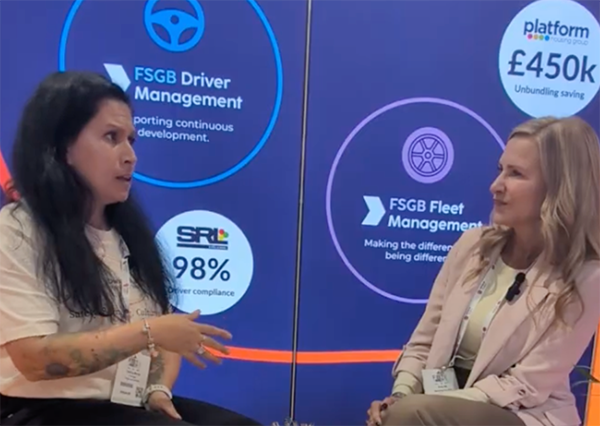
Working closely with Platform Housing Group – one of the UK’s largest social landlords managing nearly 50,000 homes – Fleet Service GB co-developed an award-winning fleet risk and compliance ecosystem powered by the Achieve platform.
By integrating driver licence validation, automated grey fleet checks, real-time telematics ingestion, and digital pre-use vehicle inspections into a single dashboard, Housing Associations gain three operational advantages:
- Pre-Empting Roadside Breakdowns: Operatives complete mandatory, photograph-backed vehicle checks on the Achieve Driver App before starting their shift. Minor defects (tyre wear, fluid drops, lighting faults) are flagged and rectified before they become a roadside breakdown en route to a 24-hour emergency callout.
- 98%+ Driver & Vehicle Compliance: Automated alerts escalate missed inspections, expired permits, or high-risk driving trends directly to line managers without manual spreadsheet chasing.
- Consolidating Mixed & Grey Fleets: Housing Associations rarely operate vans alone; housing officers, surveyors, and neighborhood managers frequently use company cars or privately owned grey-fleet vehicles to conduct initial 10-day hazard investigations. Achieve governs commercial LCVs, company cars, and grey fleet vehicles under one unified Duty of Care policy.
4 Steps to Make Your DLO Fleet “Awaab’s Law Ready” Before Phase 2
With Phase 2 bringing heating, electrical, and structural hazards into the statutory timeframe regime from November 2026, Housing Association Fleet and Operations Directors should audit four areas immediately:
- Measure True VOR Impact on SLAs: Stop measuring VOR purely by garage invoice value. Track how many repair appointments are rescheduled each month due to unscheduled vehicle downtime.
- Eliminate Data Silos Between Telematics and SMR: Feed your existing vehicle telematics directly into a centralised fleet data engine like Achieve so harsh braking, idling, and diagnostic fault codes trigger proactive maintenance bookings before a vehicle fails.
- Enforce Digital Pre-Use Inspections: Replace paper defect books or tick-box apps with an interactive driver application. that feeds defects straight to an in-house engineering team for triage.
- Ring-Fence Capital for Frontline Housing: Just as LiveWest unlocked over £86,000 in annual fleet efficiencies, eliminating crash repair waste and inflated workshop labour frees up vital operational budget to reinvest directly into tenant homes and decarbonisation.
Frequently Asked Questions (FAQ Schema Block)
How does Awaab’s Law affect Housing Association fleet management?
Awaab’s Law introduces strict legal deadlines for social landlords to investigate and fix reported health hazards. Landlords have 24 hours to make emergency hazards safe. They also have 5 working days to complete safety works after investigating a significant hazard. DLO operatives rely on specialist, racked commercial vans to carry out these repairs. Consequently, unscheduled vehicle downtime directly threatens a landlord’s ability to meet statutory repair windows.
When does Phase 2 of Awaab’s Law come into force?
- Phase 1 of Awaab’s Law came into effect on 27 October 2025, covering all emergency hazards alongside significant damp and mould hazards.
- Phase 2 is scheduled for 30 November 2026, expanding statutory timeframes to wider Housing Health and Safety Rating System (HHSRS) hazards, including excess cold and heat, electrical hazards, fire risks, and falls.
- Phase 3 will extend to nearly all remaining HHSRS hazards in 2027.
How can a DLO reduce commercial van downtime (VOR)?
Housing Associations can cut DLO van downtime using engineer-led SMR validation instead of passive, outsourced platforms. This approach enforces digital daily walkaround checks through a dedicated driver app. It also links telematics data directly to proactive driver risk profiling. Housing provider LiveWest adopted this methodology through Fleet Service GB’s Achieve platform. LiveWest subsequently reduced crash repair costs by 36%. They also cut driver-influenced maintenance spend by 13% while more than doubling fleet size.