


We all know the feeling. After a prolonged British heatwave, when the grass has turned a crispy shade of beige and the office fans are working overtime, a sudden downpour feels like a massive relief. But for fleet managers, that first summer storm shouldn’t be a reason to celebrate. In fact, it triggers one of the most hazardous driving windows of the entire year.
While your drivers might be breathing a sigh of relief as the temperature drops, their tyres are about to encounter a silent, slippery threat. Here is why the first rain after a heatwave is an absolute nightmare for fleet safety, and how you can prepare your team to handle it.
The Science of ‘Summer Ice’ and Greasy Roads
When the weather is dry for weeks, roads collect a heavy build-up of engine oil, diesel spills, rubber dust from tyres, and general road debris.
Normally, regular UK rain washes these slippery substances away before they can cause too much trouble. However, during a heatwave, two dangerous things happen:
- The Oil Slick Effect: The dry residue stays firmly on the tarmac. When the first heavy rain finally hits, it doesn’t instantly wash the grime away. Instead, the water mixes with the accumulated oils and rubber dust, creating an incredibly slick, greasy film. This dangerous phenomenon is often called “summer ice” because it mimics the slickness of a frozen winter road.
- Bitumen Bleeding: Under intense sun and heat, the bitumen (the black, sticky binder in asphalt) can actually soften and rise to the surface. This “bleeding” reduces the texture of the road. When rain falls on top of this smooth, oily bitumen, skid resistance drops to virtually zero.
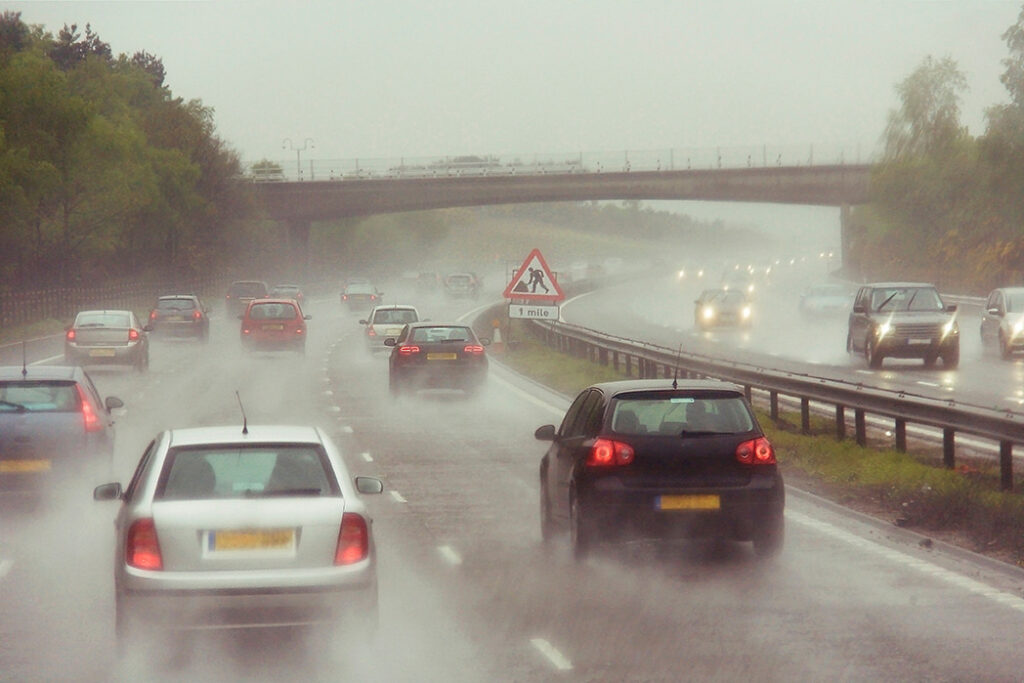
Because of this combination, a light summer shower after a hot spell is often far more dangerous than a heavy winter downpour.
The Risks to Your Fleet Operations
For a fleet manager, ignoring these greasy roads can lead to severe operational issues. The immediate risks include:
- Dramatically Increased Stopping Distances: On greasy roads, stopping distances can easily double compared to normal wet conditions. If a driver is tailgating, a minor braking incident can quickly turn into a multi-vehicle collision.
- Higher Risk of Aquaplaning: When water sits on top of a smooth, oily road surface, tyres struggle to displace it. This can cause the vehicle to temporarily float on a thin film of water, completely removing the driver’s steering and braking control. For detailed advice on how to handle this, you can refer to the official National Highways wet weather driving guide.
- Spike in Vehicle Off Road (VOR) Time: Accidents mean repairs, insurance claims, and missed deliveries—all of which drive up your operational costs.
Actionable Safety Advice for Your Drivers
To protect your team and your vehicles, share these quick, actionable tips with your drivers as soon as a post-heatwave storm is forecast:
- Double your following distance: Teach drivers to leave at least a four-second gap between them and the vehicle ahead.
- Watch out for ‘soap suds’: If you see a bubbly, white foam forming in puddles, it’s a sign that tyres are mixing oil and rubber with water. This is an active warning that the road has zero grip.
- Gently does it: Avoid harsh acceleration, sudden braking, or sharp steering inputs. Drive as if you are navigating a patch of black ice.
- Check tyre tread and pressure: Balder tyres cannot displace the water-oil mix, making aquaplaning almost inevitable.
How Fleet Service GB Can Help Keep Your Drivers Safe
Managing these seasonal risks doesn’t have to be a guessing game. Fleet Service GB is able to completely integrate your vehicle maintenance and driver safety programmes onto a single, cloud-based platform, helping you proactively mitigate weather-related risks.
Through our comprehensive Fleet Service GB Fleet Management solutions, we ensure your vehicles are always in peak condition. We handle the administrative heavy lifting, scheduling routine vehicle inspections, tracking tyre health, and minimizing unexpected breakdowns so your vehicles never go on the road with unsafe tyres.
At the same time, our Fleet Service GB Driver Management framework prioritises the human element. Using our bespoke, in-house Achieve technology and Driver App, we help you:
- Deliver targeted driver training modules focusing on adverse weather conditions.
- Automate DVLA licence checks to ensure your drivers are fully compliant.
- Monitor driver behaviour and identify high-risk driving habits before they lead to an accident on slippery roads.
- Communicate real-time safety alerts and bad-weather warnings directly to your drivers’ smartphones.
By combining vehicle health data with driver risk profiles, we give you a “Single Source of Truth” to protect your workforce, reduce your insurance premiums, and keep your business moving smoothly.
FAQs About Driving in the Rain After a Heatwave
Why is the road so slippery when it first rains after a heatwave?
During a dry spell, oils, rubber particles, and dirt build up on the road surface. When rain finally falls, it mixes with this dry grime to create a greasy, soap-like film that severely reduces tyre grip.
What is ‘summer ice’?
“Summer ice” is a term used to describe the highly slippery road conditions that occur when rain falls after a prolonged hot, dry period. The road surface becomes as slick as winter ice due to the combination of water, oil residue, and softened bitumen.
How should you react if your vehicle starts to skid or aquaplane?
If your vehicle loses grip, do not slam on the brakes. Gently ease your foot off the accelerator, hold the steering wheel straight, and allow the vehicle to slow down naturally until the tyres regain contact with the road.
FAQs About Fleet Service GB
What services does Fleet Service GB offer?
We offer a fully integrated, modular range of fleet services, including Fleet Management, Driver Management, Maintenance Management, and 24/7 Accident Management. All of our services are supported by our in-house UK experts and qualified engineers.
What is the Achieve software platform?
Achieve is our purpose-built, internally developed fleet management technology. It connects all of your driver, vehicle, maintenance, and accident data into one unified dashboard, giving you instant access to detailed reports and actionable insights.
How does Fleet Service GB manage vehicle maintenance?
We partner with a trusted UK-wide garage network. Our team of qualified engineers scrutinises every repair quote and maintenance request to ensure your fleet remains compliant, safe, and cost-effective, without you ever paying for unnecessary work.
Conclusion: Don’t Let the Weather Catch You Out
The transition from a blazing heatwave to a sudden summer downpour is one of the most dangerous times on UK roads. By educating your drivers on the dangers of “summer ice” and encouraging them to adjust their driving habits, you can prevent costly accidents and keep your team safe.
Don’t wait for the first accident report to land on your desk. Let us act as an extension of your business, managing your compliance, vehicle health, and driver training so you can focus on what you do best.
Ready to streamline your fleet and protect your drivers?
Explore our Fleet Service GB Fleet Management page and our Fleet Service GB Driver Management page to learn more about how our integrated solutions can transform your business today.